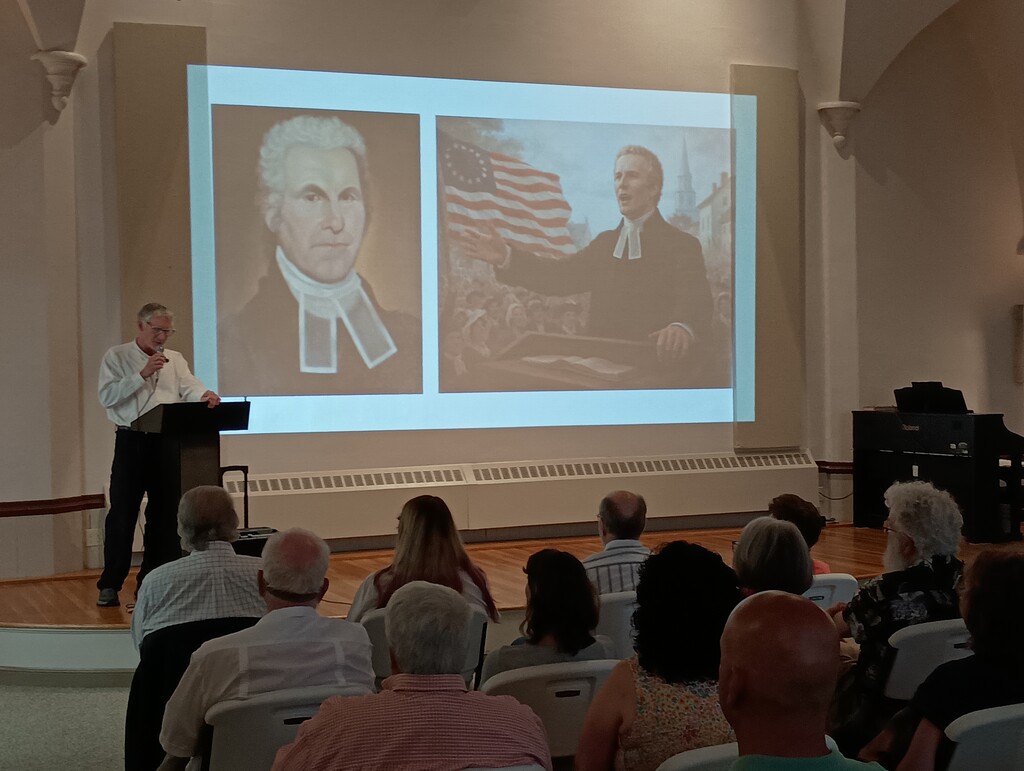
Last night on June 11, we welcomed the Bosworth Lecture Series back to the church for its June lecture. The Rev. Dr. Nancy H. Soukup, FCC’s minister, and DeWolf Fulton from St. Michael’s Mens Club who each year provide a series of Bosworth Lectures, spoke briefly to the role that FCC’s sixth pastor, the Rev. Henry Wight, had played in 1785 when he began the first ever patriotic exercises in the nation by reading the entirety of the Declaration of Independence publicly.
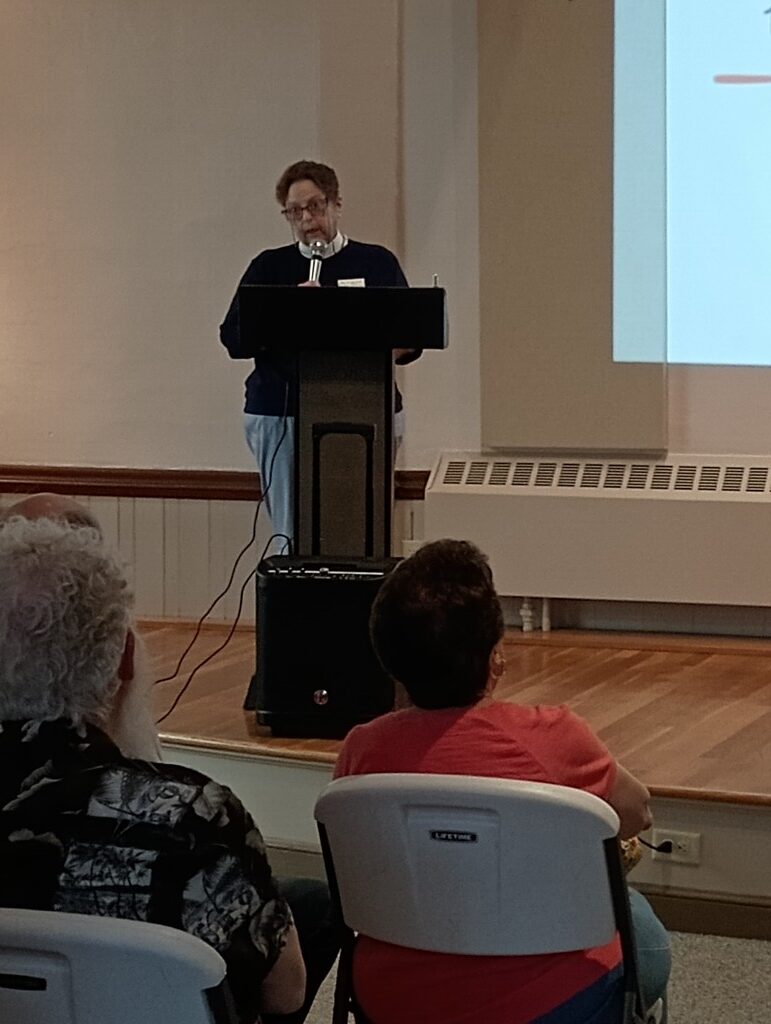
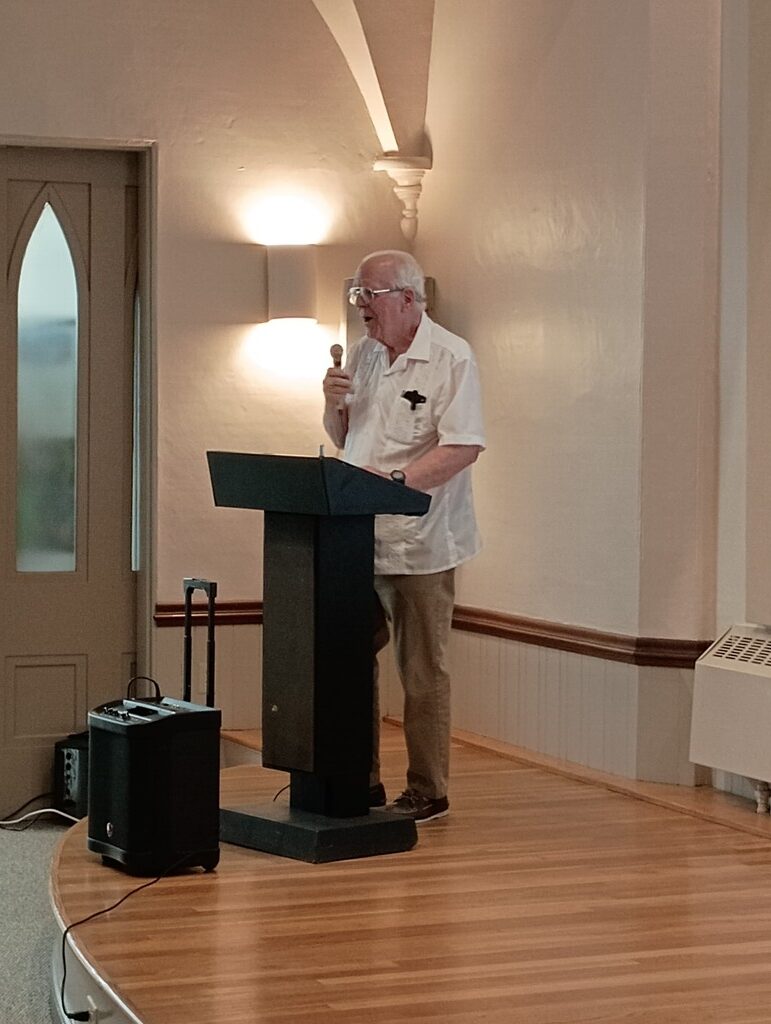
Wight called for reflection on the veterans who had won the war and for a celebration of the new nation’s freedoms. This tradition has continued in Bristol unbroken for the past 241 years with the addition over the years of speeches by Rev. Wight and other notable guests as well as the now famous July 4th parade in Bristol.
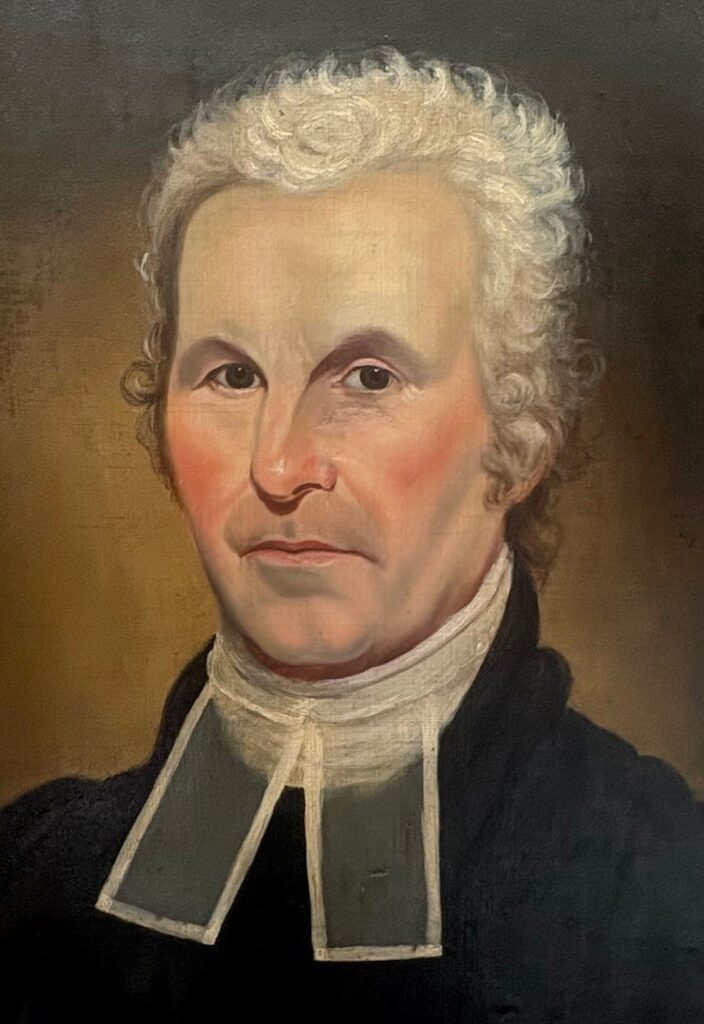
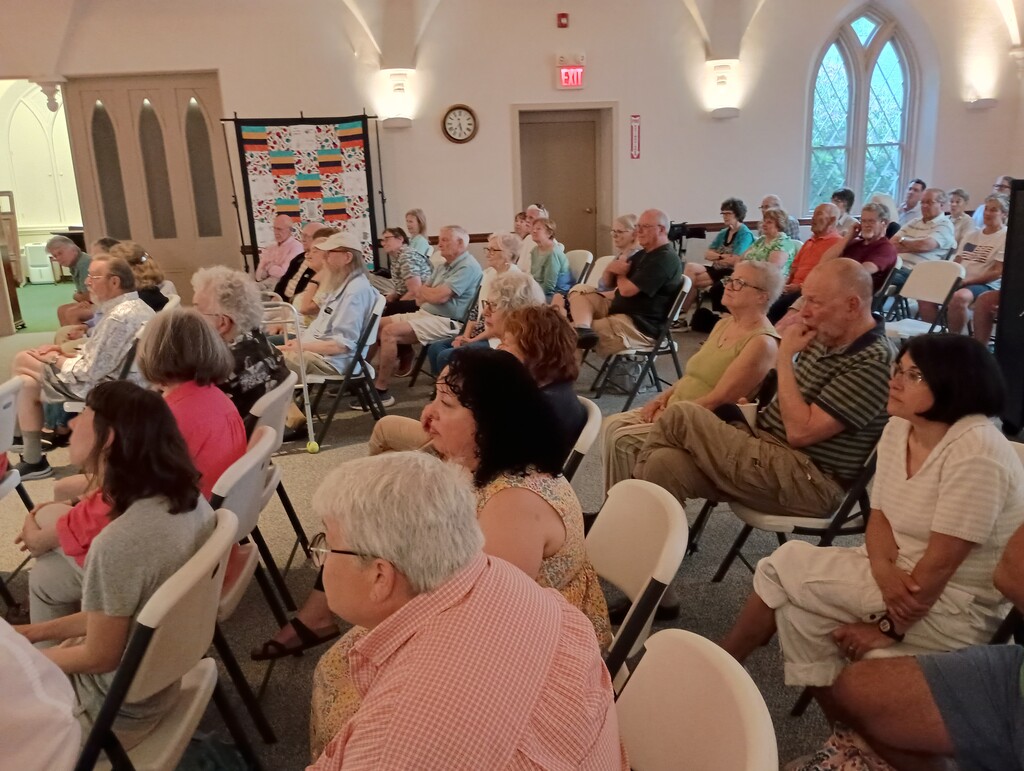
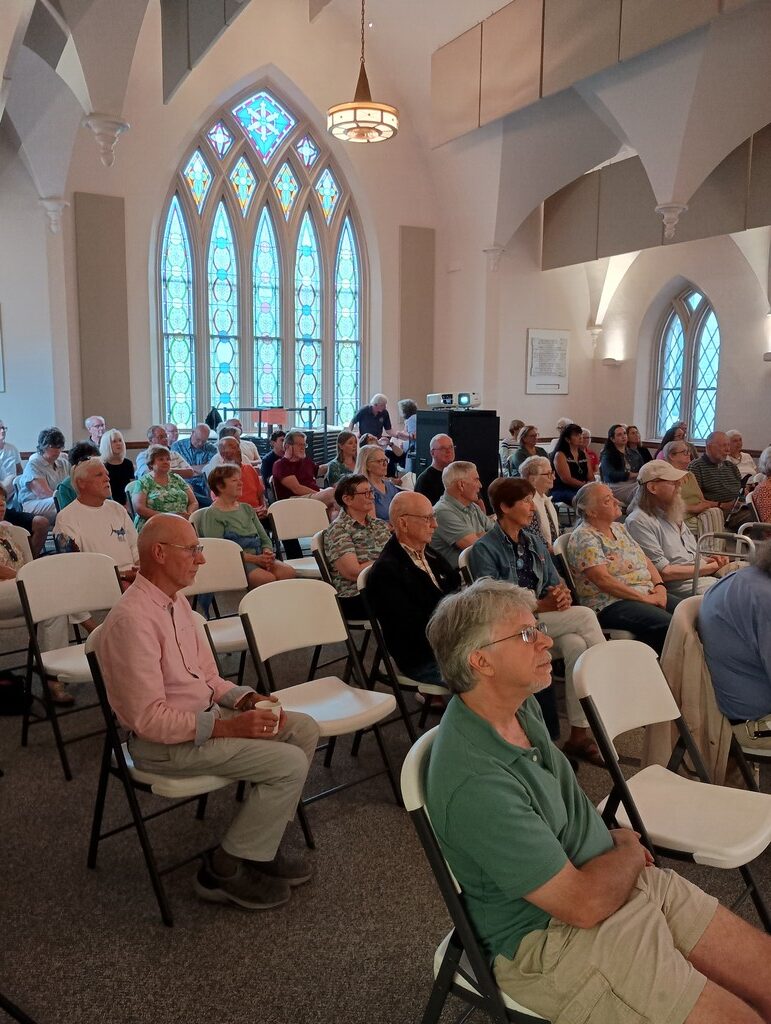
Dyan Vaughn and Rei Battcher, both members of FCC and historians specializing in the early centuries of Rhode Island’s colonization and revolutionary era, brought some 75 attendees into Rev. Wight’s world from his birth in Medfield, MA in 1752 to his death in Bristol in 1837.
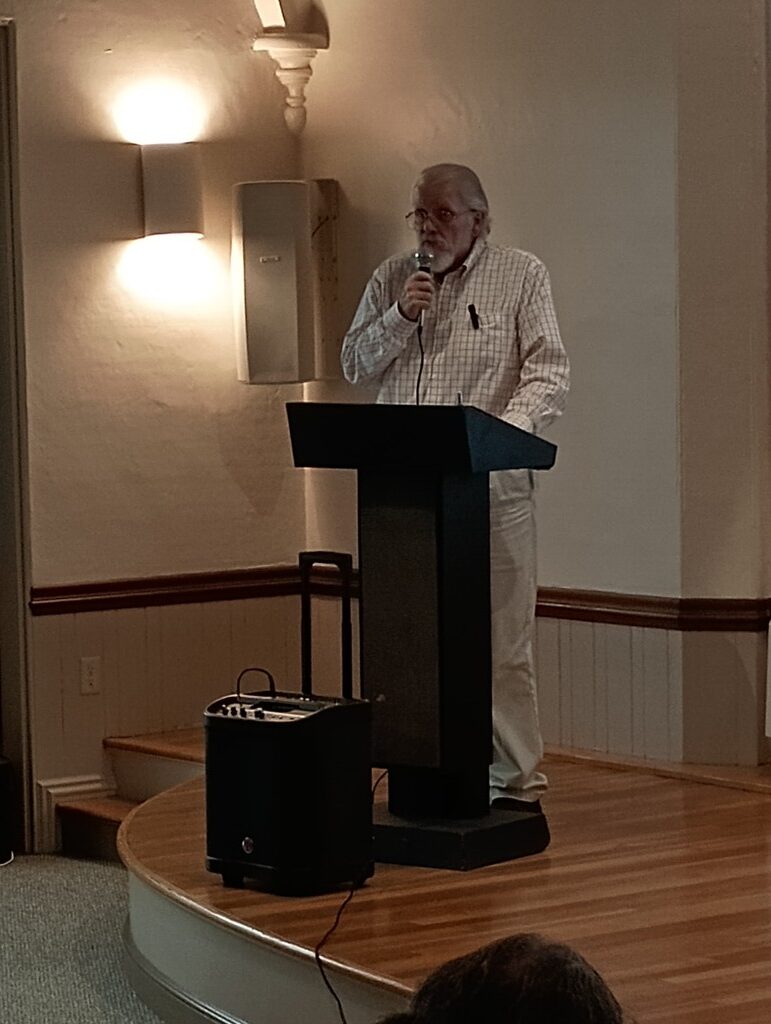
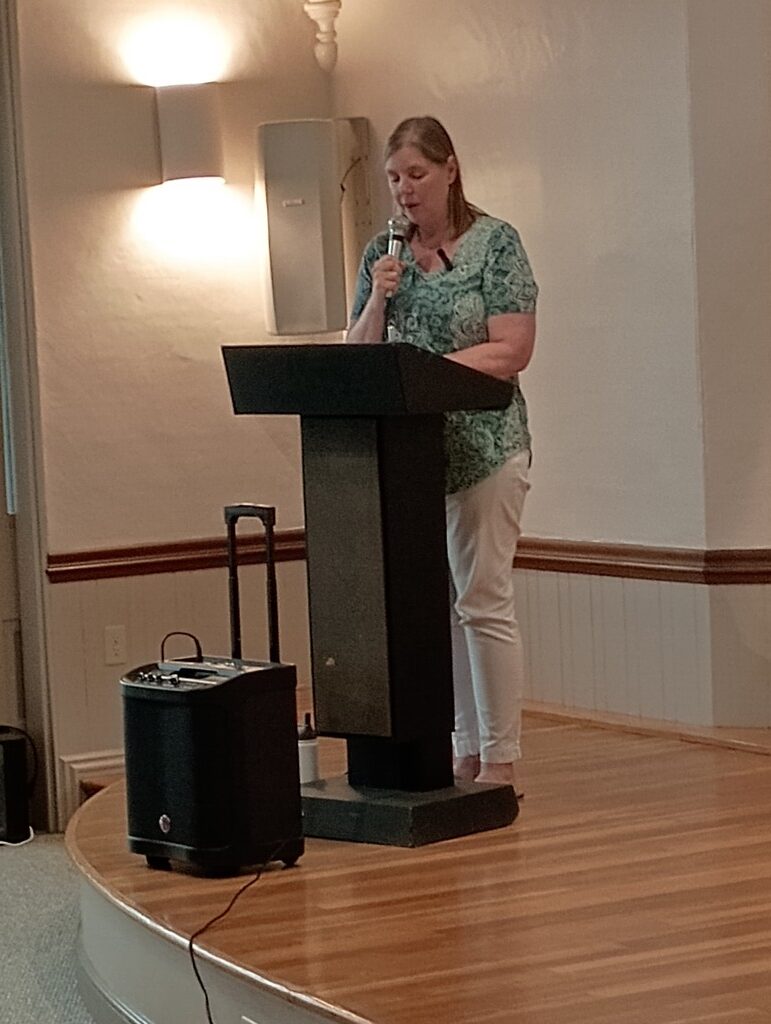
Wight’s ancestors came to the New World from the Isle of Wight in England. He served in the American military forces during the Revolution and subsequently carried on his education at Harvard University and pursued ministerial studies. He was a lifelong reader with a good knowledge of Greek, Latin, Hebrew, mathematics and science. He was called to the First Congregational Church in Bristol in 1785 and married Alice Burrington in 1789 in Little Compton. They were the parents of at least 2 sons and 1 daughter. After Alice’s death, he remarried to Clarissa Leonard. They had 7 children of which 5 daughters survived him. Wight practiced medicine as well as religion. He routinely called on sick members of his congregation and provided them with remedies as well as spiritual counsel. Wight died, much loved and respected, on 12 August 1837 in Bristol at the age of 85, 10 years after his retirement as pastor, and was buried in Juniper Hill Cemetery, Bristol.
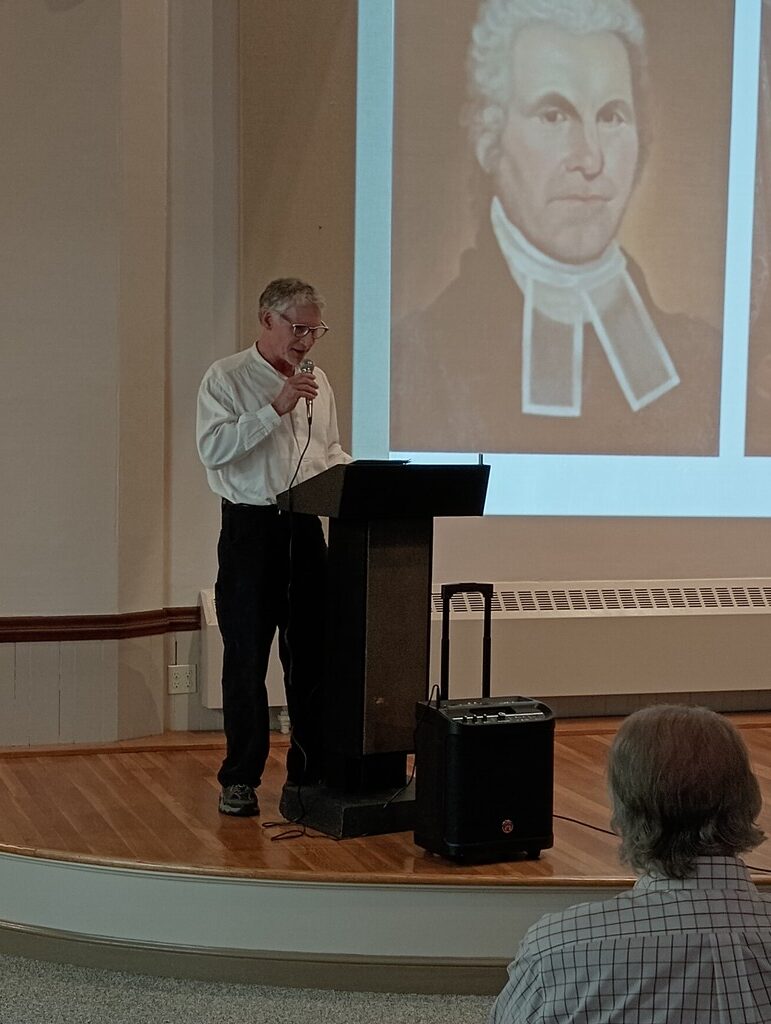
At the end of the lecture, Steve Brosnihan read excerpts from one of Rev. Wight’s patriotic addresses that spoke to the primacy of democratic independence in the lives of Americans. During the Q&A that followed, members of the audience raised questions about several myths that are told relating to Wight or to the Rev. John Burt, who preceded Wight as pastor of FCC. Through their research, Vaughan and Battcher were able to confirm the story about how the Rev. Burt, educated at Harvard University and ordained pastor of the Congregational Church in Bristol on 13th May, 1741, died at the age of 50 on 7 October, 1775, in the evening of the bombardment of the town by a British squadron. Burt was a strong advocate of liberty and religious freedom and a faithful pastor of his flock. Dyan pointed out the presence in the church’s museum, adjacent to the DeWolf Chapel, of the actual cannon ball that had landed in the field nearby the spot where the Rev. Burt’s corpse was found after the British attack. It is thought that he died of a heart attack while running from the bombardment.